
Epidemics: A History of Humanity’s Plagues Feb 11, 2026

Srilekha Deka, MD, PhD
Script Molecular is a biotech consulting firm in San Francisco, CA.
The first session at the Dublin Library has successfully concluded, and it was an incredibly rewarding experience. What made it especially meaningful was the level of engagement with the audience. Attendees brought curiosity, insight, and a willingness to explore complex ideas together.
Our discussion centered on infectious diseases, a field that continues to evolve rapidly with advances in therapeutics and immunization strategies. Along the way, several thought-provoking questions emerged:
- Are newer therapies in infectious diseases inadvertently contributing to the emergence of antimicrobial resistance and “superbugs”?
- Could vaccines that suppress symptomatic illness influence patterns of disease transmission?
These are nuanced issues that require careful scientific evaluation. The development of antimicrobial resistance, for example, is multifactorial driven by prescribing practices, patient adherence, microbial evolution, and global health dynamics. Similarly, vaccines are designed to reduce disease severity and transmission, yet their population-level effects depend on coverage rates, pathogen behavior, and ongoing surveillance.
What made the session so engaging was not the pursuit of simple answers, but the willingness to examine these complexities together. Meaningful progress in medicine often begins with asking challenging questions.
I am already looking forward to the next session, where we will explore how mistakes in medical science have unexpectedly led to some of the most significant breakthroughs in history. Innovation is not always linear—sometimes it emerges from missteps, serendipity, and re-examination.
Stay tuned for the next announcement.
In the meantime, I would welcome your thoughts. How do you see modern therapies and vaccines shaping the future of infectious disease management?
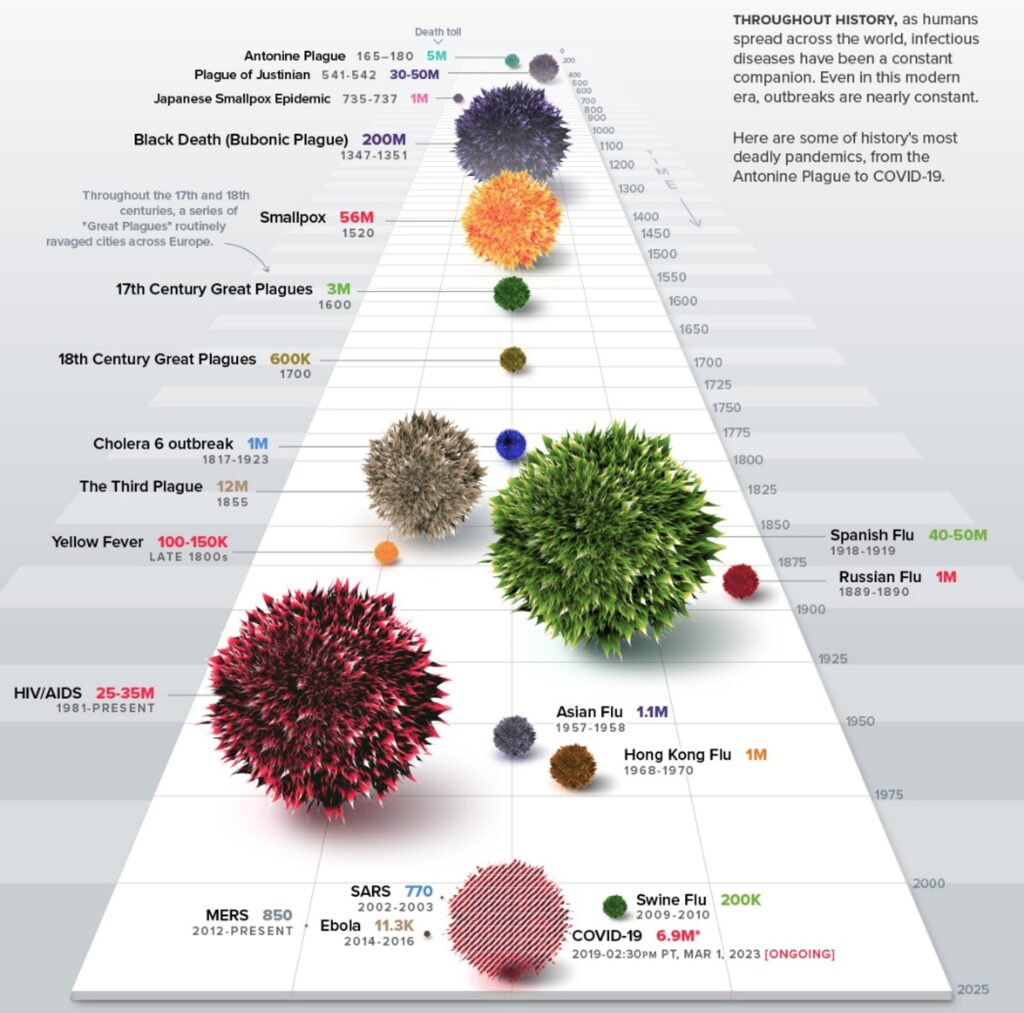
Image adapted from https://www.visualcapitalist.com/history-of-pandemics-deadliest/